Notes from the studio Art, home, heritage & the stories behind each piece

The Artful Home Journal

Stories behind
the objects we live with.

Notes on ceramic art, heritage design, color, travel, and the small choices that make a home feel collected rather than decorated.
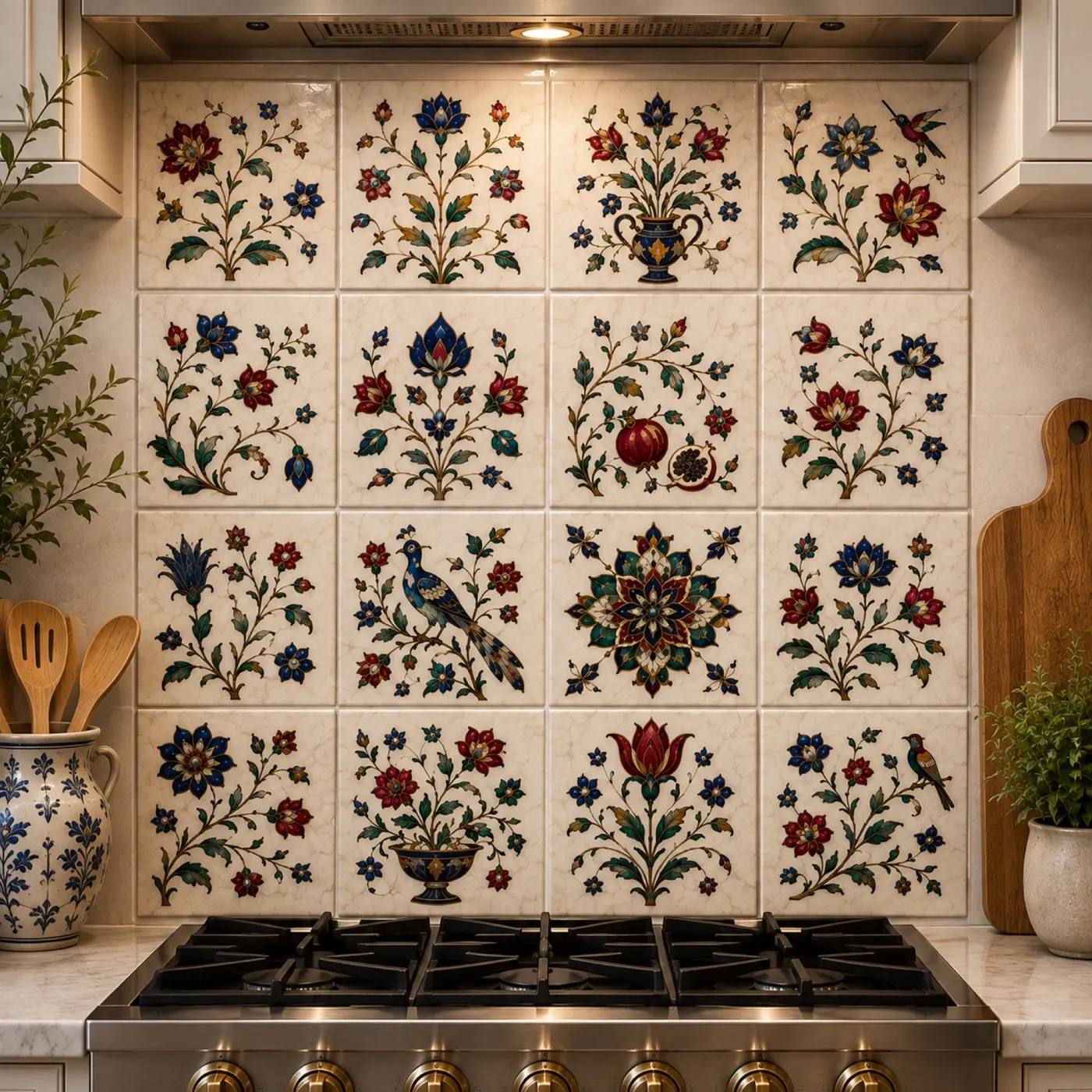
Mughal-inspired ceramic art tiles arranged as a kitchen backsplash
Jewel Garden Collection · Art By Tamri

From Tamri’s notebook

Art begins with
looking closely.

Every Art By Tamri piece begins with a detail worth noticing: the curve of a flower in an old inlay panel, the rhythm of blue and white ceramic, or the way a single object changes the feeling of a room. This journal gathers those observations and turns them into practical ideas for living with art.

Sixteen Mughal-inspired floral and bird ceramic art tiles

Heritage & inspiration · August 23, 2026

From Mughal Gardens to Ceramic Art Tiles

Pietra Dura is the art of building pictures from precisely cut pieces of colored stone. In Mughal architecture, this technique transformed marble into gardens that never faded: tulips, lilies, flowering branches, birds, fruit, and curling leaves rendered with jewel-like clarity.

What draws me to these designs is not ornament alone. It is their balance. A strong central flower may be surrounded by fine stems and tiny buds. Deep ruby, sapphire, and emerald tones are given room to glow against pale stone. Nature is observed carefully, then reorganized into something graceful and enduring.

My ceramic tile collection translates that feeling into a material made for contemporary homes. The tiles are not replicas of a historical panel, and they are not genuine stone inlay. They are original ceramic art tiles inspired by the visual language of Pietra Dura: botanical movement, saturated color, and the pleasure of detail.

Used together, the designs create a backsplash with the rhythm of a collected wall. Used individually, each tile becomes a small work of art—one flower, one bird, one moment worth noticing.

Explore the Mughal tile collection
Decorative and quiet Mughal-inspired tiles mixed in a kitchen backsplash

Design notes · August 23, 2026

How to Design a Collected Backsplash

A collected backsplash should feel as though it grew over time. Begin with two or three motifs you love, then repeat their colors rather than repeating every design. A bird, a pomegranate, and a flowering urn can feel related when the same blue, red, and green appear across the installation.

Before installation, arrange the tiles on the floor or a large table. Step back, take a photo, and look for areas that feel too dense or too empty. Move the strongest motifs away from one another so each has room to be seen.

For larger walls, mix decorative tiles with quieter ones. The result will feel intentional, layered, and personal—more like an art collection than a repeated pattern.

Set of sixteen ivory ceramic tiles with delicate floral corner details

Composition · August 23, 2026

Why Quiet Tiles Matter

In a decorative installation, the eye needs places to rest. Quiet tiles provide that pause. Their open ivory centers and small corner details connect the more elaborate pieces without competing with them.

Think of negative space as part of the artwork. It makes rich colors appear brighter, helps individual motifs remain legible, and allows a large backsplash to feel calm even when it contains many different designs.

A useful starting point is one quiet tile for every decorative tile. From there, adjust the balance to suit the room: more quiet tiles for a serene bathroom, or more design tiles for a jewel-box kitchen or bar.

A home with a point of view

Choose what makes you
pause and look again.

The most memorable rooms are not built from trends. They are built from objects, colors, and stories that mean something to the people who live there.